
Authentication#
Auth.Method in the config picks one of three modes:
| Method | Who signs you in |
|---|---|
none | nobody — no users, no login. Trusted networks only. The default. |
native | Aether: users live in its database and it shows its own login page |
proxy-header | your reverse proxy (Authelia, Authentik, oauth2-proxy), which passes the user on in headers |
In both authenticated modes, users are either admins or regular users. Admins get Settings — libraries, tasks, users — and the metadata editor; everyone gets their own playlists, stars, play queue and history. Apps never use the login password, see Connecting apps.
No authentication#
With none, anyone who can reach the server has full access. To make that
harder to do by accident, the server then listens on 127.0.0.1 only unless
Server.BindIp names a specific address, and refuses to start with a wildcard
such as 0.0.0.0.
Built-in users#
Auth:
  Method: "native"
  AdminBootstrap:
    User: "admin"
    Pw: "@/etc/aether/admin.password"   # or a bcrypt hash, or plaintext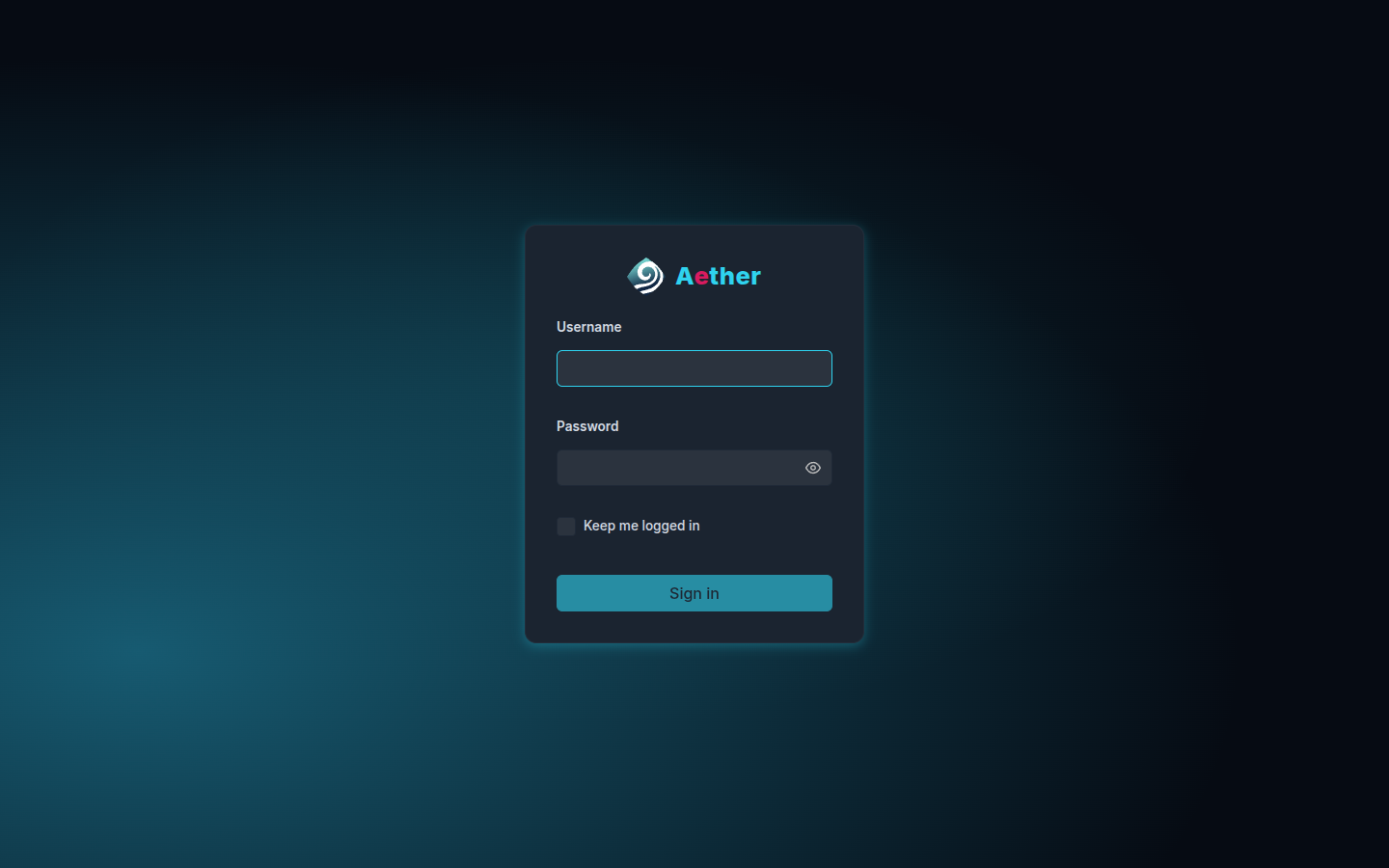
AdminBootstrap creates the first admin, and only while there are no users yet
— changing it later has no effect. Generate a hash for Pw with
aether user hash, or keep the password in a file only root can read. Admins
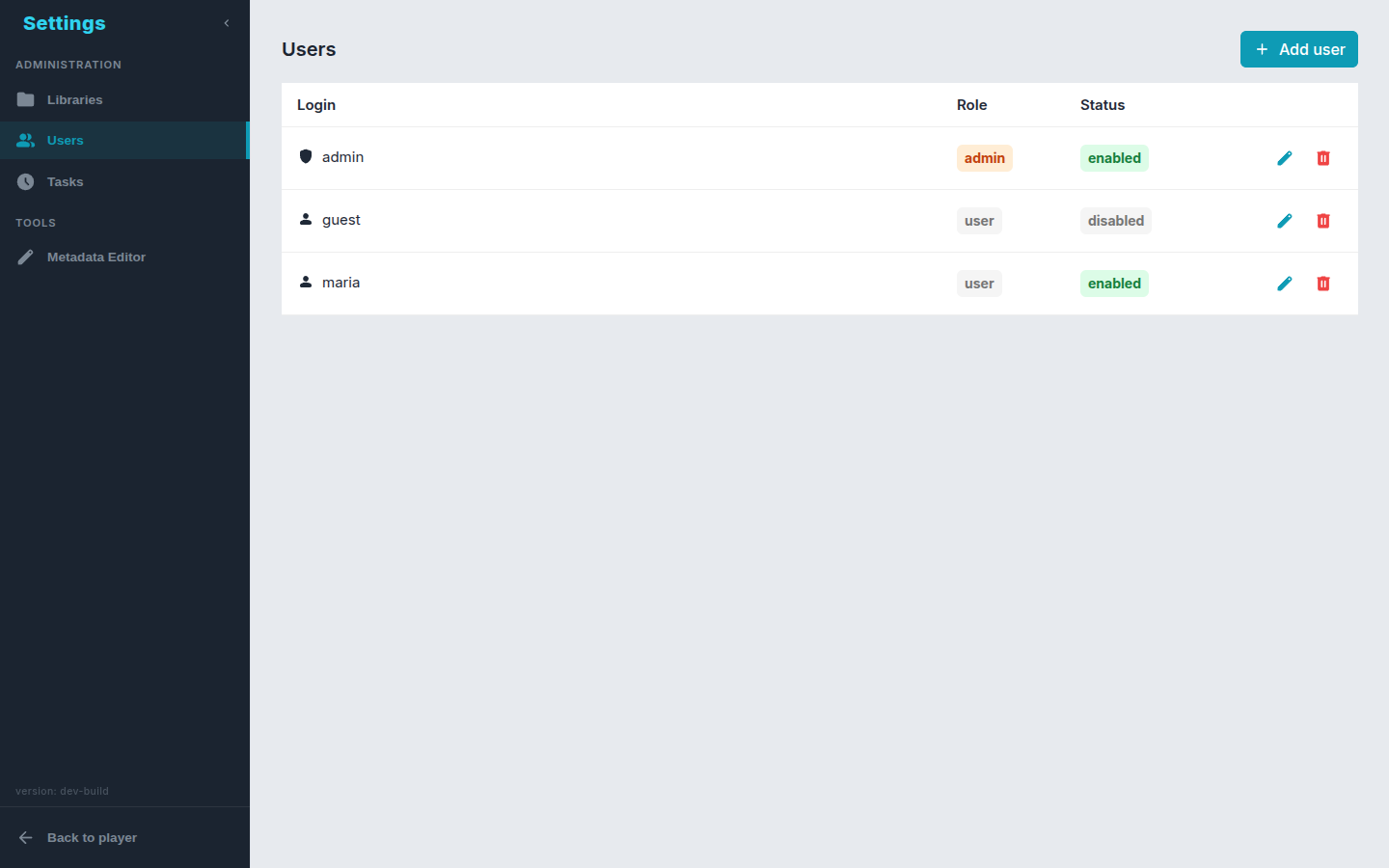
manage further users under Settings → Users; everyone can change their own
password under User settings → Account.
After a few wrong passwords, each further login attempt for that user has to wait a little longer, up to five minutes. There is no hard lockout.
The aether user command manages users with the server stopped — also the way
back in when no admin can sign in any more:
aether user list
aether user create alice --admin
aether user role alice admin
aether user reset-password alice
Behind an authenticating proxy#
With proxy-header, Aether never shows a login page. It trusts the user and
group headers your proxy adds, creates users the first time it sees them, and
makes members of AdminGroup admins — on every request, so group changes in
your identity provider apply immediately.
Server:
  BindIp: "127.0.0.1"
Auth:
  Method: "proxy-header"
  ProxyHeader:
    UserHeader: "Remote-User"        # Authelia's defaults; oauth2-proxy uses
    GroupsHeader: "Remote-Groups"    # X-Forwarded-User / X-Forwarded-Groups
    AdminGroup: "aether-admin"
    TrustedProxies:
      - "127.0.0.1"
      - "::1"
Caution
Anyone who can send these headers straight to Aether can sign in as anyone.
- Aether must be reachable only through the proxy — bind it to
127.0.0.1or an internal network.- The proxy must strip incoming identity headers from every request.
- List the proxy in
TrustedProxies. On the same host, list both127.0.0.1and::1: a proxy that connects tolocalhostmay arrive over IPv6, and its headers are then silently ignored.
Let /rest bypass the proxy’s sign-in. Subsonic apps authenticate on every
request with their own credentials and cannot fill in a login page; without the
bypass they all break at the proxy. In Authelia that is a bypass rule for
/rest and /rest/*. Everything else, including the web player, stays behind
the proxy.