
Try it#
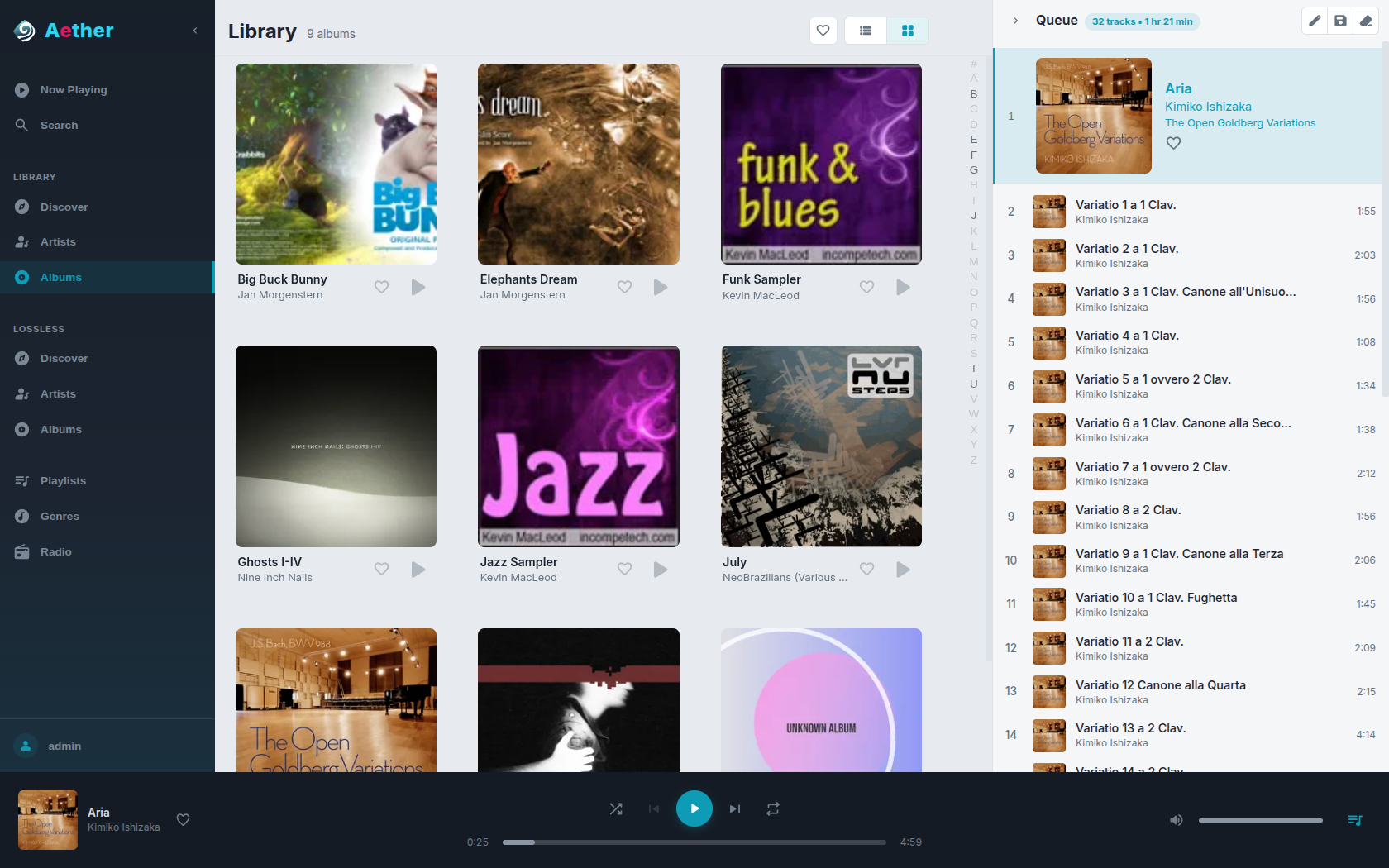
One program with the web player built in: start it, point it at your music, open the browser.
docker run -d --name aether -p 8075:8075 \
  -e AETHER_AUTH_ADMINBOOTSTRAP_PW='change-me' \
  -v aether-data:/var/lib/aether \
  -v /path/to/music:/music:ro \
  ghcr.io/andresbott/aether:latest
Open http://localhost:8075, sign in as admin with the password above, and
run a scan from Settings → Tasks. For the Debian package or the plain binary
for Linux, Windows and macOS, see Installation.
Highlights#
Aether streams your music folders to its own web player and to any Subsonic or OpenSubsonic app. Beyond that, it does a few things most self-hosted music servers do not:
A tag editor built in
Fix tags and cover art in the browser and write them back into your files. Identify a track, or a whole album at once, by AcoustID fingerprint and MusicBrainz.
Libraries are filters, not folders
Lossless only, soundtracks, the audiobooks: views over the collection by folder, format, release type or genre. An album can sit in several, and deleting one never touches your music.
A Discover feed that learns
Albums and playlists in one ranked feed, shaped by what you play, favorite and add, with every fourth slot kept for something you have never played.
One API for the web player and your apps
The web player uses nothing but OpenSubsonic, like Symfonium or DSub do. What the standard lacks is added as extensions any app can adopt.
A password per app
Your own password never goes into an app: each gets its own credentials, revoked on their own. Sign in with built-in users or through your reverse proxy (Authelia, oauth2-proxy).
Pick up where you left off
The play queue and position follow you from browser to browser, and to apps that sync the queue: pause on the laptop, carry on from the phone.